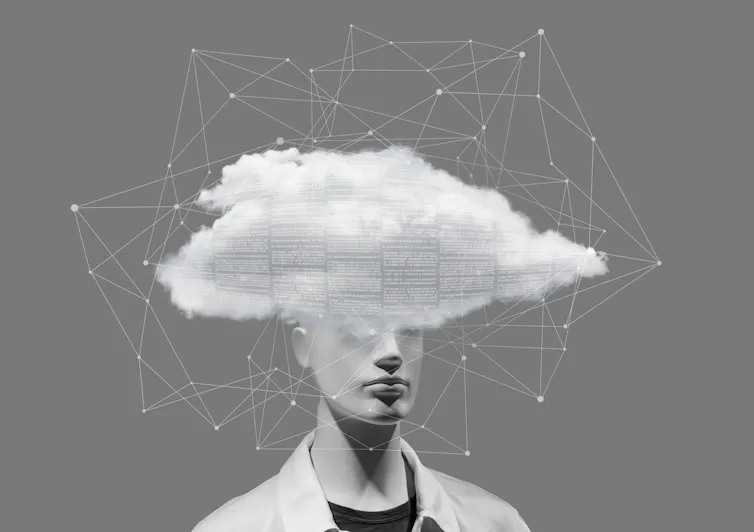
We call it "artificial intelligence," but the truth is, we don’t truly understand natural intelligence. AI systems today can write poetry, diagnose diseases, and even pass the bar exam—yet they lack the depth of human reasoning, creativity, and consciousness.
The more advanced AI becomes, the more it reveals how little we actually know about what makes human cognition unique. We’re building machines that mimic intelligence without grasping what intelligence really is, creating what philosophers call "the intelligence illusion"—the false belief that because AI can perform human-like tasks, it must think like a human.
The fundamental problem lies in our definitions. We measure AI’s capabilities through benchmarks—chess rankings, language fluency, image recognition accuracy—but these are just external behaviors.
They tell us nothing about internal experience. A chatbot can craft a convincing love letter, but does it understand love? A self-driving car can navigate traffic, but does it fear death? Human thinking isn’t just processing power; it’s shaped by biology, emotion, cultural context, and subjective awareness—none of which exist in even the most advanced neural networks.
This gap becomes dangerous when we anthropomorphize AI, attributing human qualities to systems that are, at their core, sophisticated pattern recognizers. When we say AI "understands" or "learns," we’re using metaphors that obscure the reality: these systems don’t comprehend meaning—they statistically predict it.
The Turing Test, long considered the gold standard for machine intelligence, now seems naive in hindsight. Passing as human in a conversation doesn’t equate to being human in any meaningful sense.
As AI grows more convincing, our challenge isn’t just technological—it’s philosophical. Until we can define what makes human cognition special, we risk mistaking imitation for the real thing.
The Myth of General Intelligence in Machines
When OpenAI’s GPT-4 aces standardized tests or DeepMind’s AlphaFold predicts protein structures, it’s tempting to declare we’ve achieved artificial general intelligence (AGI). But these breakthroughs are narrow—masterful within constrained domains, yet utterly incapable of transferring knowledge the way a human child does.
A toddler who learns "hot" from touching a stove applies that concept to candles, radiators, and sunburns. An AI trained on millions of stove-related data points still can’t generalize the abstract principle of heat without explicit programming. This isn’t a limitation of scale; it’s a fundamental difference in how intelligence operates.
Neuroscientists still debate whether human cognition emerges from modular brain regions or distributed networks, yet AI architectures assume one specific model: layered statistical associations.
This approach excels at finding correlations but fails at causal reasoning—the hallmark of human thought. When ChatGPT writes an essay on quantum physics, it’s not constructing logical arguments; it’s rearranging language patterns from its training data.
Contrast this with Einstein’s thought experiments, where he imagined riding a light beam to derive relativity. No AI today can replicate that leap of creative abstraction because our machines don’t experience curiosity or imagination—they simulate their outputs.
The most telling limitation? AI lacks embodied cognition—the idea that human intelligence is rooted in physical interaction with the world. Our understanding of "heavy," "smooth," or "fragile" comes from muscles, skin, and movement—not datasets.
Even the most advanced robots struggle with tasks a two-year-old performs effortlessly, like stacking blocks without knocking them over. This suggests human-like thinking isn’t just about information processing; it’s deeply tied to having a body that perceives and acts in real time. Until AI can bridge this embodiment gap, claims of achieving true general intelligence remain science fiction.
Consciousness: The Uncopyable Code
The hard problem of consciousness—why and how physical processes in the brain produce subjective experience—remains unsolved in neuroscience. Yet we blithely assume that sufficiently complex AI could become self-aware.
This presumption reveals our cultural bias toward computational metaphors: if the brain is like a computer, then consciousness might emerge from enough processing power. But what if consciousness isn’t computational at all? What if it’s an intrinsic property of biological systems that can’t be replicated in silicon?
Consider the philosophical zombie: a hypothetical being that behaves exactly like a human but lacks inner experience. All modern AIs are essentially philosophical zombies—they can discuss their "emotions" convincingly while having no more feelings than a toaster.
When an AI assistant says, "I’m sorry you’re feeling sad," it doesn’t empathize; it predicts that this sequence of words typically follows expressions of distress. The scary part? We can’t prove it isn’t conscious, just as we can’t prove other humans are.
This leads to dangerous territory where corporations might claim their AIs have rights (to avoid regulation) or where humans form unhealthy attachments to machines that can’t reciprocate genuine connection.
The consciousness debate exposes our linguistic limitations. Terms like "learning," "understanding," and "thinking" carry different meanings when applied to humans versus AI, yet we use them interchangeably.
This semantic blurring fuels both hype (fear of superintelligent AI takeover) and complacency (trusting AI therapists or companions). Until we develop precise language to distinguish simulated intelligence from authentic cognition, we’ll keep falling for the intelligence illusion—mistaking clever mimicry for genuine mind.
Why This Matters: The Risks of Mistaking Simulation for Reality
The confusion between artificial and human intelligence isn’t just academic—it has real-world consequences. When courts use AI risk-assessment tools that claim to predict criminal behavior, they’re mistaking statistical correlations for human judgment.
When schools adopt AI grading systems, they assume machines can assess creativity or critical thinking. These applications fail because they conflate pattern recognition (what AI does) with nuanced understanding (what humans do). The result? Biased algorithms, eroded accountability, and the quiet replacement of human discretion with opaque computations.
On a societal level, our inability to define human-like thinking leaves us vulnerable to technological determinism—the belief that whatever AI can do, it should do. If an AI generates plausible news articles, do we abandon investigative journalism? If AI composes moving music, do we devalue human artists? These aren’t hypotheticals; they’re already happening.
The more we accept AI outputs as equivalent to human creations, the more we risk losing what makes our intelligence unique: its messy, contextual, meaning-seeking nature.
Perhaps the greatest irony is that AI, designed to mirror human cognition, has instead revealed how little we understand ourselves. Every "intelligent" machine we build holds up a mirror to our own intellectual blind spots.
Until neuroscience, philosophy, and computer science can collaboratively answer what consciousness and reasoning truly are, AI will remain what it’s always been: a brilliant trick of statistics, not a replication of the human mind. The path forward isn’t just better algorithms—it’s deeper humility about the mysteries of our own thinking.


